
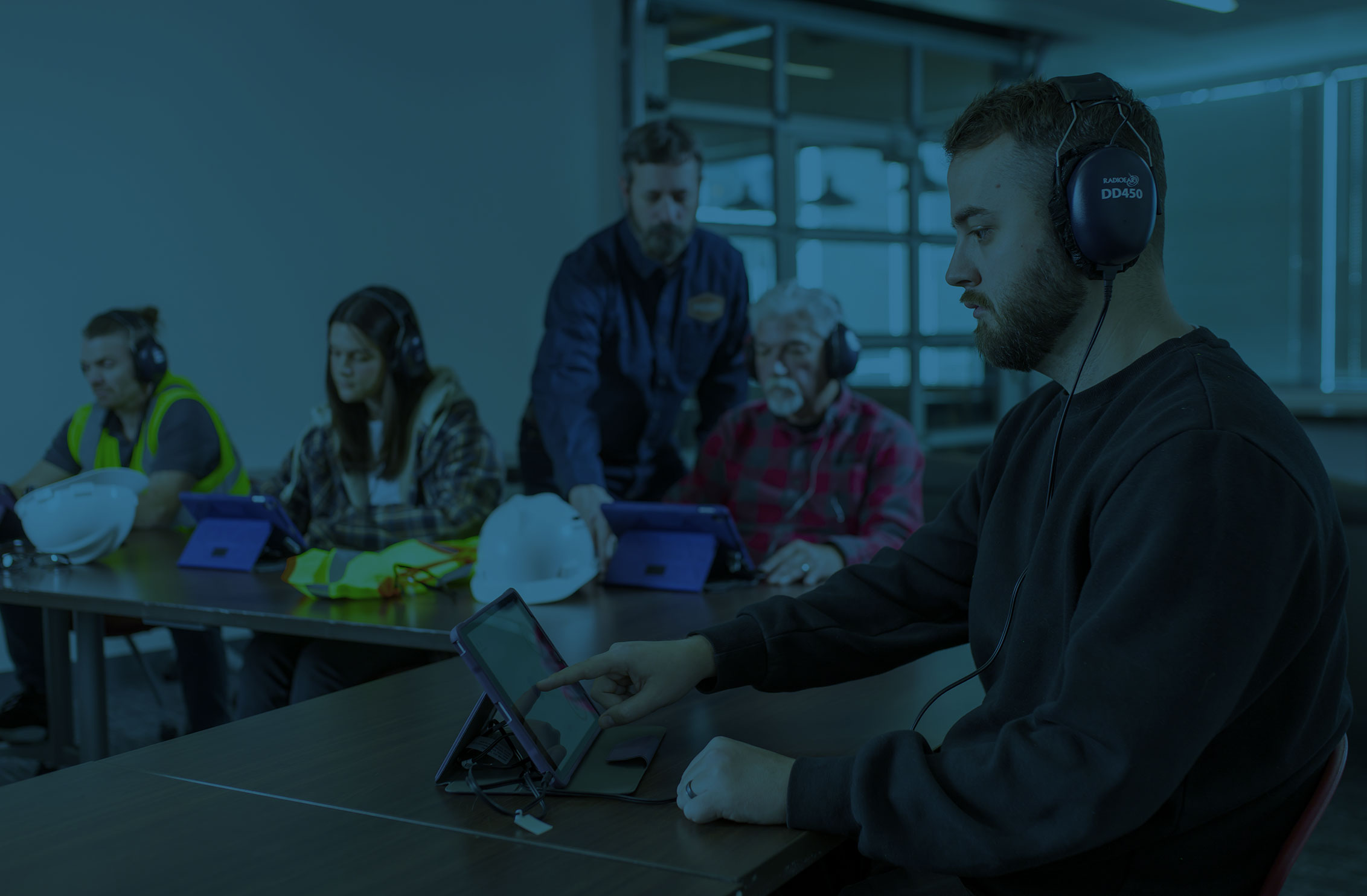
For safety and HR leaders, audiometric testing isn’t just another compliance task. It’s one of the most important indicators of whether your organization is truly protecting employees in high-noise environments and meeting OSHA hearing conservation requirements.
Yet many employers still struggle with inconsistent testing, incomplete documentation, and uncertainty around what OSHA actually requires.
This guide breaks down everything you need to know about audiometric testing, from regulatory expectations to real-world execution and how to select the right audiometric testing company. Whether you’re building a Hearing Conservation Program from scratch or improving an existing one, this guide is designed to be a practical, authoritative resource.
What Is Audiometric Testing?
Audiometric testing measures an employee’s ability to hear across a range of frequencies and sound levels. The goal is to detect early signs of noise-induced hearing loss before permanent damage occurs.
During testing, employees wear headphones while tones are played at varying pitches and volumes. Their responses are recorded to establish:
- A baseline audiogram that captures initial hearing levels
- Annual audiograms to track changes over time
- Identification of Standard Threshold Shifts (STS) as defined by OSHA
The test is quick, noninvasive, and essential for any organization with hazardous noise exposure.
Why Audiometric Testing Matters
1. OSHA and MSHA Compliance
OSHA 29 CFR 1910.95 requires audiometric testing for employees exposed to an 8-hour time-weighted average of 85 decibels or higher. MSHA has similar requirements for mining operations. Failure to comply can result in citations, fines, and increased regulatory scrutiny.
2. Early Detection of Hearing Loss
Noise-induced hearing loss is permanent but preventable. Audiometric testing allows employers to identify risk early and take corrective action.
3. Reduced Workers’ Compensation Risk
Hearing loss claims are costly and often avoidable. A strong testing and documentation process helps reduce claims and supports defensibility.
4. Stronger Safety Culture
A consistent, well-run hearing conservation program shows employees that their health is taken seriously, reinforcing trust and safety leadership.
OSHA Requirements for Audiometric Testing
To remain compliant, employers must ensure:
- Baseline audiograms within 6 months of initial exposure or within 1 year when testing is performed on-site
- Annual audiometric testing for all covered employees
- Noise exposure monitoring
- Proper hearing protection
- Employee training on hearing hazards
- Follow-up actions when a Standard Threshold Shift is identified
- Accurate recordkeeping for audiograms and exposure data
Testing alone is not enough. Compliance depends on accurate execution, interpretation, and documentation.
How Audiometric Testing Works
- Baseline Testing
Employees receive a baseline audiogram after a minimum of 14 hours without workplace noise exposure or while wearing hearing protection. - Annual Testing
Employees complete annual audiograms under consistent testing conditions. - Professional Review
Results are reviewed by qualified professionals to identify changes in hearing thresholds. - Standard Threshold Shift Management
If an STS is detected, employers must notify the employee, evaluate hearing protection, provide additional training, and determine whether retesting or clinical referral is needed. - Documentation and Record Retention
Audiograms must be retained for the duration of employment and made available during audits or inspections.
Mobile vs On-Site vs Clinic Audiometric Testing
Choosing the right testing environment is critical for both compliance and accuracy.
On-Site Audiometric Testing (Preferred for Most Employers)
On-site testing brings comprehensive hearing testing directly to your facility. Testing is performed in a quiet conference room or designated space that meets OSHA and MSHA sound level requirements.
Benefits include:
- Minimal disruption to operations
- High testing accuracy due to controlled, quiet environments
- No need for employees to leave the job site
- Easier scheduling across shifts
- Stronger compliance documentation
- Ideal for manufacturing, construction, mining, and industrial facilities
This model ensures consistent, high-quality testing while keeping employees productive and compliant.
Mobile Unit Audiometric Testing
Mobile testing is performed inside a testing vehicle parked on-site.
While mobile units can be convenient, they can introduce challenges:
- Ambient noise from nearby operations or traffic
- Vibration and environmental factors that may impact test accuracy
- Limited flexibility for certain site layouts
Mobile units can be effective in some situations, but testing accuracy can vary depending on site conditions.
CLinic-Based Audiometric Testing
Clinic testing requires employees to travel off-site to a medical facility.
This approach may work for:
- Small teams
- Individual follow-up evaluations
- Remote employees
However, clinic testing often leads to lost productivity, scheduling challenges, and inconsistent testing experiences for larger workforces.
How to Choose the Right Audiometric Testing Company
Selecting the right audiometric testing company is critical for compliance, accuracy, and long-term program success.
1. Deep OSHA and MSHA Expertise
Your provider should understand regulatory requirements and help guide your hearing conservation program, not simply perform tests.
2. Certified Professionals
Look for certified technicians with deep experience.
3. Proven On-Site Testing Capabilities
A strong provider should deliver accurate on-site testing in quiet, controlled environments within your facility. This approach minimizes disruption while ensuring reliable results and regulatory compliance.
4. Clear, Actionable Reporting
Reports should include baseline comparisons, STS identification, compliance documentation, and easy-to-understand summaries.
5. Follow-Up and STS Support
Your provider should assist with retesting, counseling, and corrective actions when threshold shifts occur.
6. Flexible Scheduling
The ability to support multiple shifts, locations, and production schedules is essential.
7. Employee-Centered Experience
Testing should be efficient, professional, and respectful of employees’ time.
Common Audiometric Testing Mistakes Employers Make
- Incomplete or inconsistent baseline audiograms
- Missed or delayed annual testing
- Poor documentation and record retention
- Inadequate follow-up on STS findings
- Working with vendors who focus on testing only, not compliance
Avoiding these mistakes significantly reduces risk during OSHA or MSHA inspections.
When to Review or Improve Your Audiometric Program
You should reassess your program if:
- You have experienced hearing loss claims
- You have been audited or cited by OSHA or MSHA
- Noise exposure levels have changed
- Testing feels disruptive or inconsistent
- Reporting and documentation are difficult to manage
Partner With A Top Audiometric Testing Company
If you’re responsible for managing audiometric testing and hearing conservation, you need a partner that delivers accuracy, consistency, and compliance without disrupting operations.
MHD provides nationwide on-site audiometric testing, bringing comprehensive hearing testing directly to your facility in controlled, quiet environments that support accurate results and OSHA and MSHA compliance.
Learn more about MHD’s audiometric testing services.